
Home / History
Our history
Since 1952, George Armstrong Co. Limited has built roads, bridges, causeways and waterfronts across Northwestern Ontario.
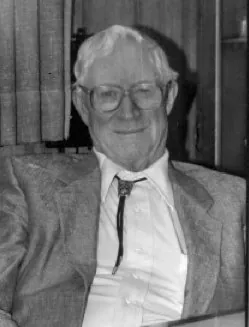
The Gravel King
George Armstrong began contracting in Northwestern Ontario in the 1940s, building bush roads, dams and railway spurs for the local paper companies, the Steep Rock iron mine at Atikokan and the Canadian National Railway. In 1948 he bought a large gravel pit, and in 1952 he founded George Armstrong Co. Limited.
Known locally as “The Gravel King,” he built the company around its own pits, crushers and ready-mix plants, and around the crews who ran them.
His life and the early years of the company are told in “A Local Legend: The History of George Armstrong,” written by Sandra Brunetta in 1992.
Read the full storyFrom bush roads to Highway 11
George’s contracting work began in the 1940s, a decade before he formed the company.
- 1940s
George Armstrong starts contracting, building bush roads, dams and railway spurs for the local paper companies, the Steep Rock iron mine and the Canadian National Railway, including 22 spur tracks for the Steep Rock ore marshalling yard in Atikokan.
- 1948
George buys a large gravel pit, the start of the aggregate side of the business.
- 1952
George forms George Armstrong Co. Limited, and a new Cedar Rapids crusher with washing attachments goes to work.
- 1954
Ready-mix and block plants built in Atikokan.
- 1956
Ready-mix plant built in Fort Frances.
- 1957
Builds the Canadian approach to the bridge at Rainy River.
- 1958
Builds the east and west approaches to the Rainy Lake causeway, now the Noden Causeway.
- 1962
Builds 12½ miles of the new Highway 11 east of Nickel Lake under Contract 62-222, part of the push to connect Fort Frances with Atikokan.
- 1960s to 1980s
Provincial highway contracts across Northwestern Ontario, including work near Nestor Falls, Emo, Atikokan and Dryden, along with the Thunder Bay coal terminal and the Fort Frances airport.
- 2009
Back on the Noden Causeway to rehabilitate its piles.
- Today
Still family owned and based in Fort Frances, with our pits, plants, barges and crane, and crews across heavy civil, marine and aggregate work.
Building the Noden Causeway
A lifeline across Rainy Lake
For decades, communities across the Rainy River district pushed for a highway east to Atikokan and the Lakehead. Work finally began in 1958 with a ceremonial blast on an island east of Fort Frances, the start of a causeway of rock fill and bridges linking the islands of Rainy Lake. The Financial Post reported it as the third largest highway project underway in Canada that year.
Building it
George Armstrong Co. Limited was there from the start, building the east and west approaches to the causeway in 1958. The company stayed with the new highway as it pushed east: in 1962 it built 12½ miles of Highway 11 east of Nickel Lake under Contract 62-222, and in 1964 it worked the stretch between the causeway and Nickel Lake.
On June 28, 1965, Premier John Robarts opened the causeway and the new highway to Atikokan, and the crossing was named after W. G. Noden, the area’s MPP, who had championed it. The three-and-a-half-mile causeway, rising 36 feet at its high-level bridge, completed Highway 11 from Rainy River to Toronto and linked Fort Frances to Atikokan, Thunder Bay and the rest of the country. It was seen as an economic lifeline for the region.
Keeping it standing
In 2009, more than fifty years after building the approaches, our crews returned to rehabilitate 856 piles under the causeway’s high-level structure for the Ministry of Transportation, working from our barges on the lake. It is a landmark we helped build, and helped keep in service.